Physiotherapy for Running Injuries
Running injuries can disrupt your routine, limit performance, and lead to long-term pain if not treated properly. At Flaman Physiotherapy, we help runners recover quickly, rebuild strength, and prevent future injuries.
Serving Saskatoon and surrounding areas.

Direct Billing Available

Experienced Physiotherapists

Personalized Treatment Plans
Are You Dealing with a Running Injury?
Running injuries often develop gradually and can worsen if ignored.
You may be experiencing:
- Pain during or after running
- Persistent soreness in the knee, foot, or hip
- Tightness or stiffness that affects performance
- Pain that returns every time you run
- Reduced endurance or strength
- Discomfort when walking or climbing stairs
If these symptoms are holding you back, targeted physiotherapy can help you recover and return stronger.
Common Running Injuries We Treat
Running injuries may be due to repetitive strain, an increase in training load or intensity, or a one-off traumatic injury. While traumatic issues may only affect one muscle/tendon/ligament/joint, repetitive injuries may begin to affect the entire leg prior to becoming serious enough to impact your performance.
We commonly treat:
- Plantar Fasciitis
- Achilles Tendonitis
- Runners Knee/Jumpers Knee
- Shin splints and lower leg pain
- Hip and IT band issues, including ‘snapping hip syndrome’.
- Ankle sprains and arch sprains
Identifying the root cause is key to preventing recurring injuries.
What Causes Running Injuries?
Most running injuries are caused by a combination of factors rather than a single event. Whether it is an overuse-type injury or a sprain, we can help you regain your mobility and performance. Some common issues causing running injuries include:
- Overuse or sudden increases in training volume
- Poor running mechanics
- Muscle imbalances or weakness
- Inadequate recovery or rest
- Improper footwear
- Limited mobility or flexibility
Our goal is to identify and correct these factors to support long-term performance.
How We Treat Running Injuries at Flaman Physiotherapy
If you have an injury impacting your running performance, we realize that your goal is to return to running! We will complete a full assessment of the injured area and the entire lower body to determine the structures at fault in the case of a training-related injury, or the structures affected in the case of a traumatic-type injury.
Bring your running shoes – we will want to look at them to determine your foot impact and stride mechanics – the wear pattern on your shoes can help us assess your functional mobility. We will bring all of this together into a cohesive treatment plan to get you back to your activities. The treatment plan will be focused on you and your injury, and may include:
Biomechanical Assessment and Treatment
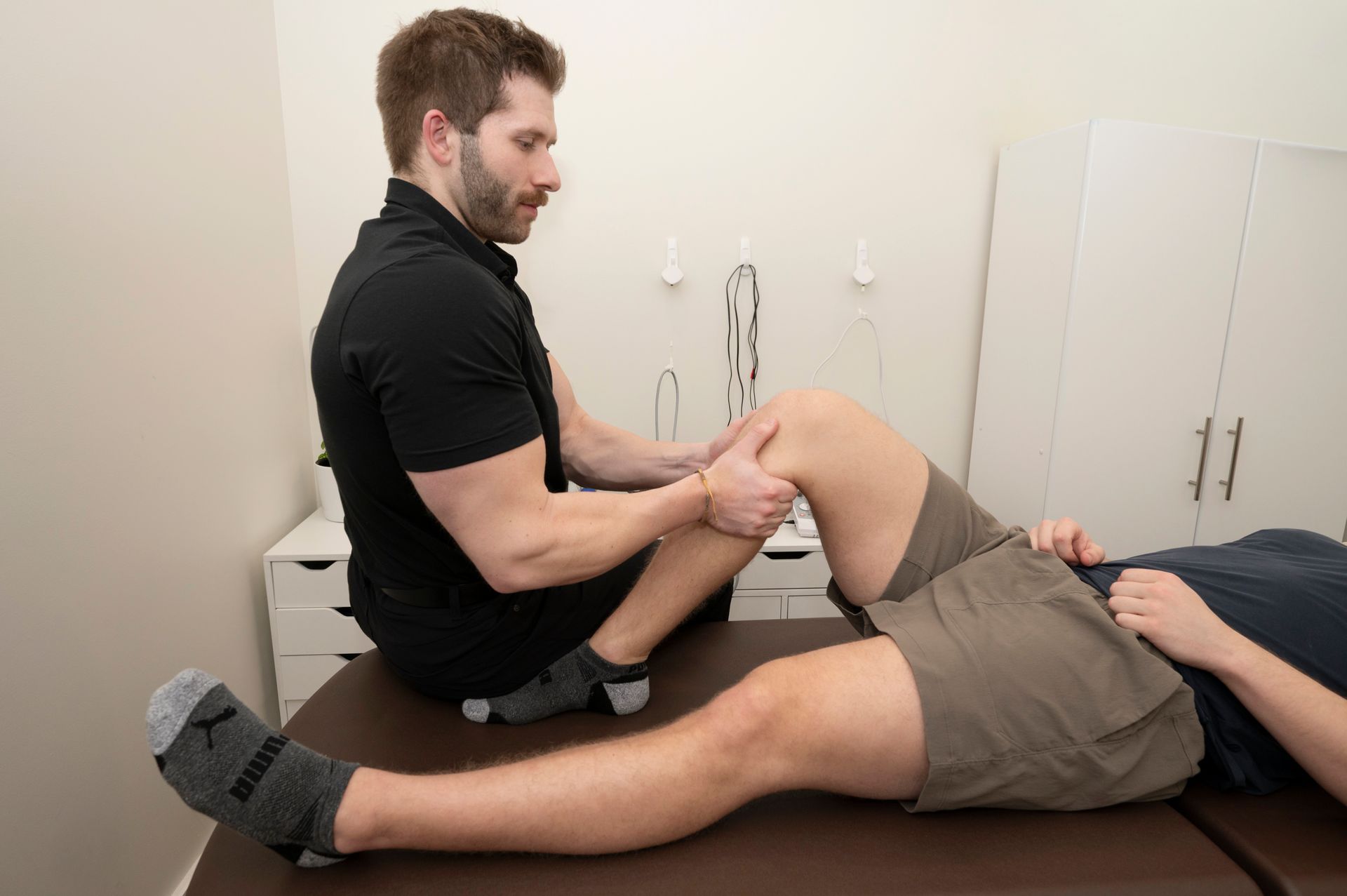
- Hands-on assessment and treatment for the affected regions to restore mobility to the injured region and any areas that may be affecting it.
Radial Shockwave Therapy
- Shockwave therapy can help to improve joint mobility, muscle extensibility, and stimulate tissues to begin to repair themselves.
Low-Level Laser Therapy
- LLLT can help with pain and inflammation in the injured structures.
Graston Technique
- Can be used in cases of long-term tightness/scarring of the muscles, tendons, and connective tissues to improve joint mobility and soft tissue extensibility.
Gunn Intramuscular Stimulation (IMS)
- Specific needling of tight muscle bands in the injured area and surrounding areas can improve mobility of the affected joints and help normalize the neuromuscular system in the region.
Ultrasound/EMS
- Ultrasound can be useful for swollen areas and pain relief. EMS/Interferential stimulation may be performed alone or in combination with acupuncture/IMS needling to promote relaxation of extremely tight and painful musculature.
Exercise and Strength Training
- Specific exercise for the injury, followed by exercises to reintegrate the injured area into your running stride, and lastly, overall strength and endurance activities safe for the recovering injury to maximize strength, endurance, and performance.
Every stage of your recovery is guided to ensure safe and effective progress.
Why Choose Flaman Physiotherapy for Running Injuries?
We understand that ‘pain relief’ is not enough. You want to return to running. Performance is paramount. We provide hands-on treatment, educational guidance, and an exercise foundation to help manage pain while your injury heals, with the goal of as little downtime as possible.
You may need to adjust your activities for a short period to reach this goal. We'll walk you through the process and explain how each step is designed to help you get back to being you. When you see us, we provide:
- Personalized treatment plans tailored to runners
- Focus on both recovery and performance improvement
- Identification of root causes, not just symptoms
- Serving Saskatoon and surrounding communities
Our goal is to help you return to running stronger than before.
What You Can Expect From Treatment
With the right treatment approach, you can expect:
Reduced pain and inflammation
Improved running mechanics
Increased strength and endurance
Faster return to running
Reduced risk of future injuries
We guide you through each stage of recovery to ensure long-term success.
Running Injury Physiotherapy FAQs
Should I stop running if I’m injured?
In many cases, reducing or modifying activity is recommended while you recover. A physiotherapist can guide safe progression.
How long does it take to recover from a running injury?
Recovery varies depending on the injury, but many runners see improvement within a few weeks of treatment.
Can physiotherapy help prevent running injuries?
Yes. Addressing strength, mobility, and movement patterns can significantly reduce injury risk.
What is the most common running injury?
Conditions like plantar fasciitis, tendonitis, and runner’s knee are among the most common.
Do I need to change my running form?
In some cases, improving running mechanics can help prevent recurring injuries.
Physiotherapy Treatments
Benefits of Workplace Injury Physiotherapy
Physiotherapy can help injured workers reduce pain and inflammation, restore mobility and strength, improve functional movement, return to work safely, reduce risk of reinjury, and regain confidence performing work tasks.
Why Choose Flaman Physiotherapy
Patients across Saskatoon trust Flaman Physiotherapy because of our personalized and evidence-based rehabilitation programs.
Our physiotherapists work closely with patients to understand their job requirements and create treatment plans that support safe return to work.
Our approach includes detailed injury assessments, personalized rehabilitation plans, targeted physiotherapy treatment, and education to prevent future injuries.
Get Back to Running with Confidence
Don’t let injury keep you off the road or trail. With the right treatment and guidance, you can recover fully and return to running stronger than before.
Proudly serving Saskatoon and surrounding areas.